ATTENTION: For Those who are serious about Getting Pre-Qualified FAST!

Bill Rapp, Mortgage Originator: NMLS 228246
"Brokers Are Better.
Better Pricing, Better Service!"
Subscribe To My List Below To Get Your Mortgage Quote Now!
Simply enter your name and email below:
WITH PROVEN STRATEGIES & PROVEN RESULTS
HERE'S WHAT MY CLIENTS SAY:
What People Are Saying:

Excellent Service
Bill is an exceptional loan officer. He helped us to purchase our home with very personal and professional service. He helped us navigate the whole process from start to closing without any problems. We didn't think we're qualified to purchase a house, but Bill went above and beyond to find a way to help us achieve our goal. He always responded very quickly with our requests, he would come back with different options with comparison chart to clearly indicate how much we need for down payment, monthly payments, interest rates, closing costs etc.
We would highly recommend Bill to anyone in need of lending services. In fact, we have already recommended Bill to one of our friends on purchasing a house.
--- David Chan - Houston, TX

Bank Statement Lending!
William Rapp of Network Funding, L. P. was very professional and I felt comfortable in dealing with him. I will definitely recommend him to family and friends.
--- Ian F - Missouri City, TX

Professionalism - Expert In Home Style Loan
Bill is an expert in the topic, his explanations and online material make a difference and he is always there from the beginning to the end. He is committed to make thing happen.
--- Felipe Caldern & Carolina Angel Gutierrez

Great Service!
Bill Rapp's handling of our loan (even though out of state) was unparalleled to any service I have been through prior, including 3 different real estate transactions and multiple refinances. Extremely quick close, with great options and flexibility for my families needs. All around A+
--- Chris & Beth Sheehan - San Jose, CA

Knowledgeable and Responsive!
Bill was a pleasure to work with and he made the loan process fairly easy. He answered all questions I had very quickly and was straight forward in doing it. I would recommend Bill to others.
--- Wes Brady - Richmond, TX

Very professional and always returned our calls!
Bill takes a lot of pride in his job and is very dependable. They were very patient and understanding. He went out of his way and explained all my questions and concerns. They were very professional and returned my phone calls and emails. He did a great job and I fully recommend him.
--- Therese, Malcom & Shirley Teixeira - Katy, TX

Great Job!
Bill helped us out from beginning to end of loan process. The loan closed in a timely manner as Bill worked hard with bank to get our to the final steps.
--- Kamal & Theresa Wilson - Hartford, CT

Avid Problem-Solver and Absolute Pleasure to Work With!
Bill Rapp worked very hard to ensure that we closed our loan and were able to move into our new home. He always had alternatives to any problems we encountered while closing. He worked with us from the beginning identifying solutions to any problems that we were having. He was an absolute pleasure to work with!
--- Nikita Rayani & Sanit Tejani - Houston, TX

Awesome to work with!
Being a first-time buyer I came in with lots of questions and concerns. Bill was always available for any questions I had and answered everything to my satisfaction. Bill made the loan process so painless that I could still concentrate on other things. We ended up closing early which made things even better. If you are in need of a lender and want someone who is very approachable and stays on top of your loan then Bill is your guy.
--- Cesar Raya - Richmond, TX

Loan Declined by my bank, and he saved the day!
Bill, did an amazing job helping me close on my house. He took the reigns and reassured me the best route to take to help close. He was accountable, thorough and trustworthy. I will continue to work with Network Funding, L.P. when it comes to home buying in the future because of the quality of service Bill gave.
--- Jacob Smith - Boerne, TX

Bill Rapp Will Definitely Make It Happen!
Bill is the most kind, patient and helpful person I have ever known. He answers his phone calls and emails promptly. You can ask him a million questions, and he will answer each and every one of them. Before I started working with Bill, I had been turned down for a home loan, because of some past credit issues I had, plus I was a single mother. However, once I started working with Bill, he was able to quickly get me a home loan, with a good interest rate. I would recommend that you call him, as he will help you.
--- Corinne Wilson - Roselle, NJ

Knowledgeable, Honest, Trustworthy, and Reliable!
"I will definitely keep you in mind. If anyone I know needs financing, I will send them your way!"
--- Jon & Andrea Saleem, CRPC Financial Advisor - Houston, TX

Best Dam Mortgage Guy a man could know!
"Hands down the best loan experience to date!"
--- Gabe & Chelsea Jackson - Pearland, TX

Phenomenal, Hard Working and Never Quits!
Had a stupid foreclosure that could have been avoided if ex’s attny would have sent my buy out offer. So Bill was able to push this through with a 4 year foreclosure. He worked his butt off, was very diligent with his communication; and was very professional talking to me even when I was screaming and/or crying at him. Highly recommend this lender. He really go to the ends of the earth to help you!
--- Liz Keeter - Harlingen, TX

Exceptional customer service!
Bill is the most kind, patient and helpful person I have ever known. He answers his phone calls and emails promptly. You can ask him a million questions, and he will answer each and every one of them. Before I started working with Bill, I had been turned down for a home loan, because of some past credit issues I had, plus I was a single mother. However, once I started working with Bill, he was able to quickly get me a home loan, with a good interest rate. I would recommend that you call him, as he will help you.
--- Isha Lopez & Mauricio Garcia - Houston, TX

Service with a capitol S
Bill went above and beyond at every turn. He worked late on Saturday, he worked late all the time. We wanted to close ASAP and he really helped make it happen for us.
--- Jeff & Wendy Heger - Houston, TX

Best Buying Experience!
I would would highly recommend going with Network Funding LP. As a first time home buyer I didn't know what to expect. Bill Rapp was very helpful in answering all my questions and guided me through all ghe steps. I couldn't have asked for a better buying experience!
--- Tabitha Turner - Humble, TX

Would recommend him and use him again!
Very involved and professional . Kept me informed and up to date on everything that was going on Went with me closing and was very helpful and knowledgeable.
--- Kathy Ward - Houston, TX

Great experience!
Well I meet bill back in December 2016 he got recommended by my real estate agent we had a house in sight and started the process to get approved but we fail due to my work history and credit bill told me not to give up and put me in contact with a credit repair company they help me bring my score up and bill walk me thru the process of getting a new line so this time around we got approved before looking for our house after we found it we still had a couple of hick up but with bills help on Sunday 6-18-17 to be exact Father's Day bill called me to give me the great news that we had got approved and the closing date was as scheduled bill was more than just a lender to my family he became a friend and I'm alway going to have him in mind for any other financial situation.
--- Alejandres Felimon - Richmond, TX

I really liked his attitude!
I wouldn't usually say this but the way he had handled my mortgage was really pleasant. I personally enjoyed the time spent with him while we discussed feasible rates. He's a great man with a great personality and he offered really low interests as well. Definitely recommend him to others.
--- Tom Troiano - Atlantic City, NJ

He's nothing short of a miracle!
I'm a self-employed businessman and had him figure out the mortgage of the house after 30% down payment. The interest rates I received were incredibly low given what I had thought of earlier. One other important thing to note was that I hadn't really taken any loans earlier, so I had no credit history. He helped me out with all that as well so I can't really call him anything else but a miracle.
--- Fran Suarez - Cleveland, OH

He's really helpful!
I made a bid to him and the very same day he gave me an offer which I couldn't resist. It was too intimidating with those incredibly low interest rates and all, thoroughly recommend him.
--- Kenny Mickle - Houston, TX

Expeditious!
Bill was very expeditious and made it real easy going through the loan process. I felt he was on top of things.
I deal with investment properties and will more than likely call on him again.
--- Wayne King - Pensacola, FL

Bill was great!
Bill made us feel like a friend all the way thru the process. He was patient and explained everything he needed clearly. He was available ANYTIME we had questions or needed more information. Hopefully we won’t go thru this process again anytime soon, but if we do - we’d choose Bill! =)
--- Barbra & Nick Grimmer - Austin, TX

Great broker!
Bill was a great broker to work with. As first time home buyers we had many questions about the process, Bill took the time to help us even calling us back on weekends with answers. I would not hesitate to recommend him to anyone looking for a broker to work with.
--- Murray & Lisa Turner - Pensacola, FL

Outstanding service!
I couldn't have been more pleased with Bill's level of service. He made what is typically a lengthy, arduous process far quicker and easier at every turn. I'm extremely comfortable recommending Bill to friends and family, and will definitely utilize his services again!
--- Jim Lipari - Austin, TX
9 Things Every Dentist & Doctor Should Know About Mortgages
Brew up a great cup of coffee, pull out your notepads, iPads, MacBooks or whatever you prefer to take notes with—this post is epic and contains everything you ever wanted to know about physician loans. More importantly, you’ll find step-by-step information on how to research, compare banks and negotiate to get the best mortgage rates. Let’s go!
1. Physician Loans: A History Lesson
Special mortgage products for doctors are not new, but when you compare them with the modern mortgage market (popularized by insurance companies—not banks—in the 1930’s), they are relatively new products that have yet to make their way into the mainstream.
Sometime in the mid-2000’s, a forward-thinking employee at Bank of America (let’s call him Steve) honed in on an interesting strategy for attracting wealthy—or soon to be wealthy—clients to the bank.
Every single year, over 16,000 fresh-faced medical school grads were being matched to their residency/fellowship programs all over the United States. The majority of these new graduates had massive student loans. In fact, according to the Association of American Medical Colleges, the average medical student in 2015 will amass over $183,000 in debt. That figure is up 2% over 2014. If you look at this situation through a traditional lens, you understand why a recent graduate would never qualify for a traditional mortgage loan: too much debt and zero income history.
Most of these students also emerged into their adult life with the preconceived notion that renting an apartment or home is not a good idea. They would prefer to purchase a home, but can’t. Finally, Steve discovered that MDs have one of the lowest default rates (.02%) of any demographic, so it was relatively safe to lend them money.
That perfect storm created the doctor loan program.
Being an astute strategist and looking to add value to the bottom line, Steve brought this idea to the upper brass at the bank in Charlotte. It took a few months to consider the strategy, vet it out and get it approved. But once implemented, the program was hugely successful. It filled a much-needed void, so the bank generated millions and millions of dollars of new revenue by originating physician loans.
Competing banks took notice. They soon carved out similar doctor loan programs, complete with unique benefits, rates, and states where a resident could purchase a new home.
Now that we understand the history and how we got here, let’s take a look at what these loans look like in general.
2. A physician loan…
Requires you to invest very little money down for a down payment, usually zero to five percent of the total purchase price.
Accepts your residency/fellowship/employment contract as proof of how much money you will be making in the future. Usually, conventional mortgage underwriters look backward at your earning history in efforts to determine if you’ll be able to afford your monthly payment and not default.
Might call on you to open an account with the originating bank. Typically, they’ll need you to set up an auto-draft for your monthly payment, which lowers the risk of default. Forcing you to open an account is also a way for the bank to ensure you’ll be doing business other than your physician loan with them, with the hopes of converting you into a lifetime customer.
May be used by a resident or practicing physician. This is the case at 90% of the banks that offer physician loans. Make sure you inquire as soon as you can about this important distinction.Can be used on most property types (single family and townhomes), but in certain cities and regions, you may not be eligible to purchase a condo with a physician mortgage.
Does not distinguish between a conventional mortgage loan and a jumbo loan. Most banks will charge higher rates and fees on anything over $417,000, which is considered a riskier product, thus the name “jumbo”. A point of note: not all banks that offer the doctor loan program offer jumbo loans.
In some cases, lending guidelines may allow you to use money you receive as a gift for a down payment, cash reserves or miscellaneous closing costs.
Requires you to have decent credit. Typically, you need to be in the neighborhood of 700-720+. If you have scores that are over 800, congratulations. You’re in a different league, and the absolute best rates and terms for physician loans will be available to you.
Mandates that you have a loan payment to income ratio of less than 38%, which means your monthly payment can’t equate to more than 38% of your income. This can vary with lenders, though, and is something you should ask about for when interviewing different banks.
Let’s move on to the other mortgage type so you can easily compare the two.
3. Conventional conforming loans…
Require 3% to 5% down. For reference, 3% of a $200,000 loan would be $6,000. That is just what it takes to get in the door and qualify for the mortgage. This does not include any fees or percentages you’ll pay your Realtor.
Require PMI (private mortgage insurance) if you don’t put 20% down or have 20% equity in the home.
Allow you to qualify with a credit score of 580 or above.
Require three months of cash in reserve that could cover PITI (principal, interest, taxes and insurance) payments on the loan.
Require proof of earnings history (W-2 forms, bank statements, and/or pay stubs). If you’re self-employed, you’ll need to present two years of previous tax returns.
Use any debt (consumer, student, etc.) as factors in your debt-to-income ratios.
Require a debt-to-income ratio of 45% to 55%. This just means your debts can’t equate to more than 45% to 55% of your income.
Allow you to purchase condominiums in most markets.
Here comes the but…keep in mind not all banks can loan in every one of these areas, and each bank’s doctor loan program will be unique in each state. Some banks even vary rates and terms based on the particular city.
Caliber Home Loans makes Doctor loans in all 50 states.
4. These are your options :
There are many alternatives to physician loans. Let’s take a look at the main ones:
Conventional Mortgages – These are your typical mortgages, and encompass anything that isn’t part of a specific government loan or special program. They come in many flavors: 30, 20, 15 and 10 year fixed rate or 5/1, 7/1 and 10/1 adjustable rate mortgages (ARM). If you put at least 20% down, you’ll get a better interest rate and will not have to pay mortgage insurance. This is a good idea if you have the cash.
Many banks offer options for you to pay less than 20% down. The disadvantage of putting less money down are higher rates. If you’re not able to put 20% down, the bank will require you to pay PMI.
As of September 2016, you’ll have to put down at least 3% for this type of loan. Before the 2008 financial meltdown, there were many programs available that offered borrowers 100% financing. Those options have disappeared, many say with good reason.
FHA Loans – These loans are administered and regulated by the Federal Housing Authority. They allow for lower credit scores than conventional loans and require as little as 3.5% down. They also require private mortgage insurance (PMI) on all loans.
VA Loans – This program was created for US Military veterans and are guaranteed by the VA. They do not require a down payment or PMI, but there is an upfront fee (1.5% – 2% depending on your down payment) with most loans.
USDA Loans – Offered to rural, low-income borrowers, these mortgages require zero money down, are often cheaper than going the FHA route. They are sponsored and administered by the US Department of Agriculture and do require PMI.
State and Local Programs – These programs aim to help low to moderate income buyers purchase a home. Some are aimed at certain professions like teachers, firefighters and police officers. You can find out more and see if there is something available for doctors here. The last time I checked, there was not.
5. How to compare banks and their mortgages
It may seem like a daunting task, but putting the time into up-front research is well worth the end result. For example, on a $300,000 30-year fixed rate mortgage, reducing your interest rate by just .25% will save you almost $16,000 in interest payments over the life of your mortgage.
Call Caliber Home Loans who can shop your loan to ensure you get the best mortgage!
6. How mortgage rates are determined by banks
Before we get into negotiating rates, it’s helpful to understand how banks come up with the rates they charge borrowers for their home loans. This is a fascinating, complicated process. It’s not possible to say that interest rates are tied to one particular index, economic factor or governing body. It is possible to say that banks want to be as competitive as possible and at the same time as profitable as possible. This leads to the very strategic game that is determining their rates.
Things that influence rates include: the secondary mortgage market (how much investors are willing to pay for vast tranches—which are packaged bundles—of loans that are packaged up and sold as mortgage-backed securities), inflation rates, the price of US Treasuries, the LIBOR Bank rate and the Federal Reserve funds rate.
7. Finding the perfect home
There are many guides online that can help you define what will make the perfect home for you. HTGV, Forbes, and Houzz have put together some nice ones. Do this first, because it’s important to narrow your possibilities and focus on homes that fit your criteria.
Once you know what you’re looking for, be prepared to do a lot of virtual house-hunting. Things have changed a lot since your parents drove around with their Realtor to look at every single house they were interested in. Be very glad about that.
8. Buying a house isn’t a good idea for everyone
Let’s be honest. Sometimes, it just makes more sense to rent. If you’re not sure about where you’ll be in three years, rent. If you think you’re in a declining market, and there’s a possibility that home prices will decrease, rent. We’ve come up with a guide to help you weigh these factors: Getting a Physician Loan vs. Renting. The New York Times also put together a great interactive article called Is it Better to Rent or Buy?
In many cases, it makes more sense to buy. From a financial and psychological perspective, the benefits of homeownership are pretty compelling.
If you are saddled with consumer debt and/or excessive student loans, you also might want to pay off some of those debts before purchasing real estate, even with a physician mortgage loan. It all depends on the interest rates and terms. Check out this post on debt from Future Proof M.D. for more info and a few options.
Think about it and choose the path that is right for you.
9. You need to educate yourself
Our physician mortgage loan FAQ will answer more of your burning questions about physician loans specifically, but it’s critical you learn as much as you can about the finance and home buying process. This is the biggest purchase you’ll ever make, and it pays dividends to know what you’re doing. At least know the basics. You’ll probably buy another house in your lifetime, and you can continue to build on your home buying knowledge with every purchase.
Heck. You may even be able to pass this knowledge down to your friends, family or children one day. It’s important stuff.
Please comment below and let me know if there are other things you’d like to know. If you spot any mistakes, point them out, and I’ll correct them.
My best advice to you is to give Bill Rapp, the Mortgage Viking, a call today to discuss the next steps: 281-222-0433.
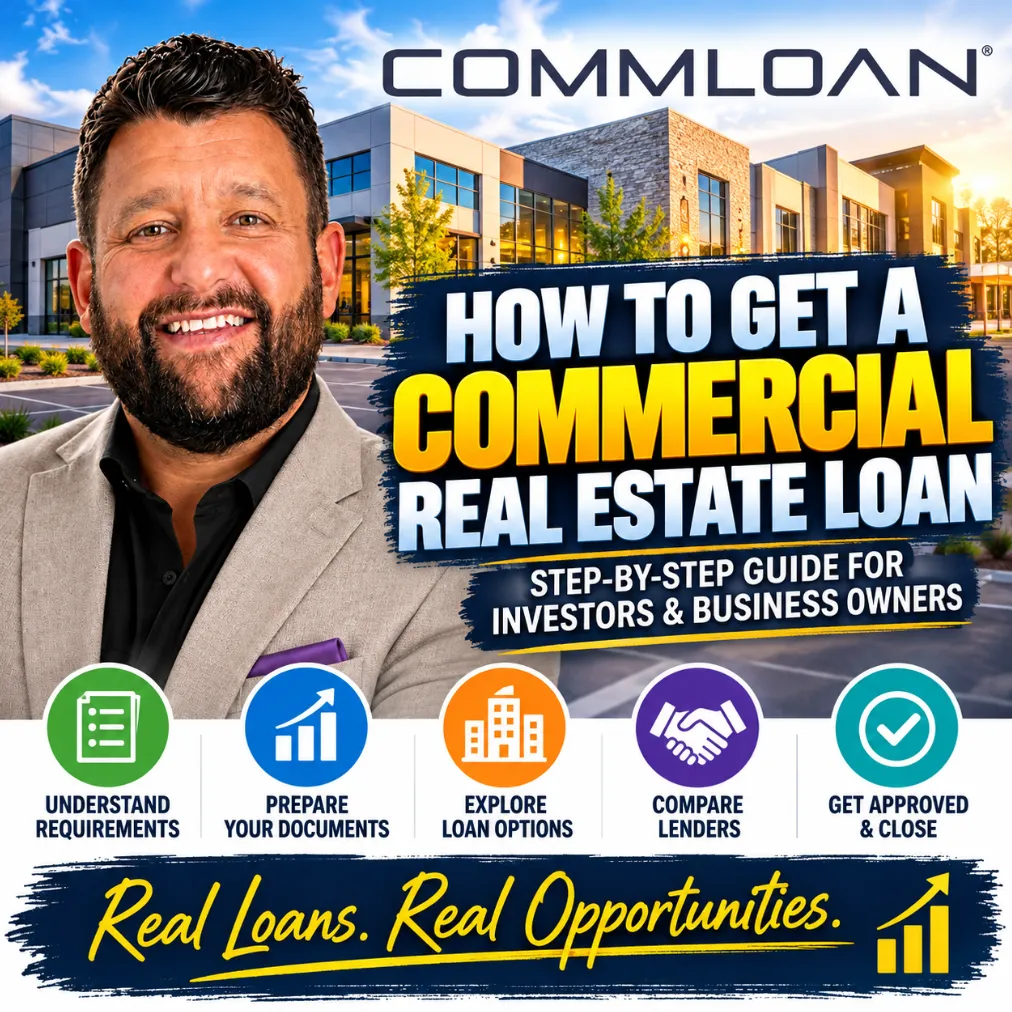
🏢 How to Get a Commercial Real Estate Loan: Step-by-Step Guide for Investors & Business Owners 💰
🏢 How to Get a Commercial Real Estate Loan: Step-by-Step Guide for Investors & Business Owners 💰
💵 Commercial Real Estate Loan Requirements: How to Qualify, Find the Right Lender & Secure Financing 🏦
________________________________________________________________________________
Primary keyword: How to Get a Commercial Real Estate Loan
How to Get a Commercial Real Estate Loan: A Step-by-Step Guide
Buying commercial real estate can be one of the most significant financial decisions an investor or business owner makes. Whether you're purchasing an apartment building, office property, retail center, industrial warehouse, or owner-occupied business location, securing the right financing is essential.
But commercial real estate financing works differently from residential mortgage lending.
Commercial lenders evaluate more than your credit score and down payment. They examine the property's income, debt service coverage, borrower experience, liquidity, financial strength, and overall transaction risk.
Understanding how to get a commercial real estate loan can help you avoid costly mistakes, improve your financing options, and negotiate more favorable loan terms.
At the CommLoan Empower Program, we help commercial real estate investors and business owners evaluate financing alternatives through a broad commercial lending marketplace.
Here's what you need to know before applying.
Step 1: Understand the Types of Commercial Real Estate Loans
The first step is identifying the financing program that fits your property, investment strategy, and financial objectives.
Conventional Commercial Real Estate Loans
Conventional commercial mortgages are commonly offered by banks, credit unions, and other commercial lenders.
These loans are frequently used to finance stabilized commercial properties, including office buildings, retail centers, industrial facilities, and multifamily investments.
Typical characteristics may include:
·Loan-to-value ratios around 65%–80%, depending on the lender and property.
·Fixed or floating interest rates.
·Amortization periods commonly ranging from 15–30 years.
·Loan maturities that may be shorter than the amortization schedule.
·Full, partial, or nonrecourse structures, depending on the transaction.
SBA 7(a) and SBA 504 Loans
Small Business Administration loan programs can provide attractive financing for eligible owner-occupied commercial properties.
SBA 7(a) financing can support qualifying real estate purchases, business acquisitions, equipment, and certain working capital needs.
SBA 504 financing primarily supports eligible long-term fixed assets, including commercial property acquisitions, construction, and major equipment.
Qualified borrowers may benefit from lower equity requirements than many conventional commercial mortgages.
SBA financing generally requires qualifying business occupancy and is not designed for passive real estate investment.
Commercial Bridge Loans
Bridge financing is often used when a property needs renovations, lease-up, repositioning, or stabilization before qualifying for permanent financing.
Bridge loans typically offer shorter terms and may carry higher interest rates and fees than stabilized permanent financing.
A clearly defined exit strategy is critical.
Multifamily and Agency Loans
Investors purchasing or refinancing qualifying apartment properties may have access to financing through banks, life insurance companies, debt funds, and agency lending programs.
Fannie Mae and Freddie Mac multifamily programs can provide attractive financing for eligible properties and sponsors.
Construction Loans
Construction financing supports ground-up development, major renovations, and redevelopment projects.
Lenders typically evaluate construction budgets, project feasibility, sponsor experience, guarantees, and the anticipated permanent financing or sale strategy.
Key takeaway: The best loan program depends on the property, borrower, and business plan—not simply the lowest advertised interest rate.
Step 2: Understand Commercial Loan Qualification Requirements
Commercial mortgage lenders generally evaluate several important underwriting factors.
Loan-to-Value Ratio (LTV)
LTV measures the proposed loan amount relative to the property's appraised value.
\[ \text{LTV}=\frac{\text{Loan Amount}}{\text{Property Value}}\times100 \]
For example, if a property is valued at $2,000,000 and the proposed loan is $1,400,000:
\[ \text{LTV}=70\% \]
For acquisitions, lenders may also apply purchase-price or lower-of-cost-or-value limitations.
Debt Service Coverage Ratio (DSCR)
DSCR measures the property's ability to cover its annual mortgage payments from net operating income.
\[ \text{DSCR}=\frac{\text{Net Operating Income}}{\text{Annual Debt Service}} \]
Suppose a commercial property generates $180,000 in annual NOI and requires $135,000 in annual debt service.
\[ \text{DSCR}=1.33x \]
This means the property generates approximately $1.33 in net operating income for every $1.00 of required debt service.
Many lenders target minimum DSCR levels around 1.20x–1.30x, although actual requirements vary by property type, loan product, and lender.
Debt Yield
Debt yield evaluates the property's NOI relative to the loan amount.
\[ \text{Debt Yield}=\frac{\text{NOI}}{\text{Loan Amount}}\times100 \]
For a property with $180,000 in NOI and a proposed $1,800,000 loan:
\[ \text{Debt Yield}=10\% \]
Debt yield helps lenders evaluate credit risk independently of interest rates and amortization.
Borrower Credit, Liquidity, and Net Worth
Commercial lenders may also consider personal credit, available liquidity, contingent liabilities, real estate ownership experience, and post-closing reserves.
A strong property does not automatically overcome a weak borrower profile.
Step 3: Determine Your Down Payment
One of the most common questions is:
How much money do I need down for a commercial real estate loan?
The answer depends on the property type, financing program, and transaction risk.
Financing type | Illustrative equity requirement |
Conventional commercial mortgage | 20%–35% |
SBA 7(a) real estate financing | Often 10% or more |
SBA 504 eligible project | Often 10%–20% |
Multifamily investment financing | 20%–35% |
Hotel financing | 25%–40% or more |
Bridge financing | Varies substantially |
These are general planning ranges, not guaranteed lender terms. SBA equity requirements depend on program rules and transaction characteristics.
Investors should also budget for appraisals, environmental assessments, legal fees, lender fees, reserves, and other closing expenses.
Step 4: Prepare Your Commercial Loan Documentation
One of the fastest ways to delay a commercial financing transaction is submitting an incomplete loan package.
Depending on the lender and transaction, commonly requested documents include:
·Purchase contract or letter of intent.
·Current rent roll and copies of leases.
·Trailing 12-month operating statement (T-12).
·Historical property financial statements.
·Personal financial statement.
·Personal and business tax returns, when required.
·Bank and investment account statements.
·Schedule of real estate owned.
·Business financial statements for owner-occupied properties.
·Property insurance information.
·Business plan, renovation budget, or construction projections when applicable.
A complete package helps lenders evaluate the transaction more efficiently and can reduce repeated document requests.
Step 5: Determine How Much Financing the Property Can Support
One of the biggest misconceptions in commercial real estate financing is that a lender's maximum advertised LTV automatically determines your loan amount.
It doesn't.
Lenders may size loans using several constraints, including LTV, DSCR, debt yield, and borrower financial strength.
Example: Commercial Loan Sizing
Illustrative investment property financing
Property value
$3,000,000
Annual NOI
$210,000
Maximum LTV
75%
Minimum DSCR
1.25x
Loan sizing constraints
LTV maximum
$2,250,000
DSCR maximum
$2,059,000
Estimated maximum loan
$2.06M
Assumes a 7.00% interest rate, 25-year amortization, annual debt service factor of approximately 8.48%, and no more restrictive debt-yield or other constraints. Illustration only.
Even though the lender permits 75% LTV, the property's income supports a smaller loan under the assumed DSCR requirement.
This is why underwriting the property before negotiating financing terms is so important.
Step 6: Compare Commercial Mortgage Lenders
Different commercial lenders have different credit policies, property preferences, and loan structures.
A bank might offer an attractive rate but require substantial recourse.
A debt fund might provide more flexible underwriting but charge higher financing costs.
An agency lender might offer attractive long-term financing for a qualifying multifamily property but impose specific prepayment provisions.
When comparing commercial loan offers, evaluate:
1.Interest rate and total borrowing cost.
2.Maximum loan proceeds.
3.Loan term and amortization.
4.Recourse and guarantee requirements.
5.Prepayment penalties and exit flexibility.
6.Reserve requirements and closing costs.
The cheapest quoted interest rate does not necessarily produce the best investment outcome.
Step 7: Get Prequalified Before Making an Offer
Commercial loan prequalification can help investors understand their potential financing capacity before entering into a purchase agreement.
An initial financing assessment may evaluate property value, anticipated NOI, down payment availability, borrower experience, and proposed loan structure.
Prequalification is not a commitment to lend. Final approval remains subject to underwriting, due diligence, and lender requirements.
Nevertheless, an informed financing strategy can improve negotiations and reduce execution risk.
Step 8: Complete Underwriting and Due Diligence
Once a lender is selected, the transaction moves through formal underwriting.
The process may involve:
·Third-party appraisal.
·Phase I environmental site assessment.
·Property condition assessment.
·Title and survey review.
·Lease and income verification.
·Borrower financial verification.
·Credit approval and legal documentation.
Additional requirements may apply to specialized property types such as hotels, healthcare facilities, restaurants, and construction projects.
Step 9: Review the Loan Terms Before Closing
Before signing commercial mortgage documents, understand the obligations you are accepting.
Pay particular attention to balloon maturities, personal guarantees, cash management provisions, reserve requirements, financial reporting covenants, and prepayment penalties.
Some commercial loans require yield maintenance, defeasance, or other prepayment arrangements that can materially affect the cost of refinancing or selling.
A financing structure should align with your anticipated ownership period and exit strategy.
Step 10: Work With a Commercial Capital Advisor
Commercial financing is not a one-size-fits-all process.
The right capital advisor can help investors understand lender requirements, structure a financeable transaction, evaluate competing loan offers, and identify potential issues before they become closing problems.
Through the CommLoan Empower Program, borrowers can explore financing opportunities through a commercial lending marketplace with access to more than 700 lenders.
Instead of assuming that one bank's credit policy represents the entire lending market, investors can evaluate financing alternatives based on the needs of their specific transaction.
Common Mistakes to Avoid When Applying for a Commercial Real Estate Loan
Several preventable mistakes can undermine an otherwise attractive transaction.
Mistake 1: Shopping exclusively for the lowest rate. Loan proceeds, recourse, prepayment flexibility, and maturity risk may matter just as much.
Mistake 2: Assuming maximum LTV equals available financing. DSCR and debt yield may produce a lower loan amount.
Mistake 3: Underestimating required equity. Closing expenses, reserves, and lender adjustments can increase the cash required.
Mistake 4: Providing incomplete financial documentation. Missing rent rolls, financial statements, and borrower information can delay underwriting.
Mistake 5: Ignoring the exit strategy. A short-term loan without a realistic refinance or sale plan can create significant risk.
Frequently Asked Questions About Commercial Real Estate Loans
What credit score do you need for a commercial real estate loan?
There is no universal minimum credit score. Some commercial lenders emphasize sponsor credit, while others place greater weight on property cash flow, collateral, and liquidity. SBA and bank programs may have specific credit standards.
Can I get a commercial real estate loan with 10% down?
Potentially. Certain qualifying SBA transactions may permit financing with approximately 10% borrower equity, while conventional investment property loans often require substantially more.
How long does it take to get a commercial real estate loan?
Straightforward transactions may close within approximately 30–60 days after a complete application, while complex, agency, SBA, construction, or specialized property transactions may take longer. Timelines vary considerably.
Can an LLC obtain a commercial real estate loan?
Yes. Many commercial real estate loans are originated to limited liability companies or other eligible borrowing entities. Lenders may still require personal guarantees or evaluate the financial strength of the principals.
Can I qualify without substantial commercial real estate experience?
Possibly. Lenders consider borrower experience alongside property performance, leverage, financial resources, and professional management. Requirements vary by lender and program.
Is it better to use a bank or commercial mortgage broker?
A bank offers its own financing programs, while a commercial mortgage broker or capital advisor can help evaluate alternatives across multiple lending sources. The best approach depends on your transaction and existing lending relationships.
Final Thoughts: Getting the Right Commercial Real Estate Loan
Getting a commercial real estate loan involves more than completing an application.
Successful borrowers understand their financing options, prepare complete financial documentation, evaluate the property's cash flow, and select financing that supports their investment strategy.
Whether you're acquiring your first commercial property, expanding your portfolio, refinancing an existing investment, or purchasing real estate for your business, the right financing structure can make a meaningful difference.
Ready to Explore Your Commercial Financing Options?
Bill Rapp, CCIM CommLoan Empower Program | Commercial Capital Advisor
Explore commercial financing alternatives and take the next step toward your investment objectives.
Explore Commercial Financing with Bill Rapp
Top of Form
Bottom of Form
Bill Rapp, CCIM
Director | CommLoan
📞 281-222-0433
📧 [email protected]
🌐 https://billrapp.commloan.com/
🌐 https://HoustonCommercialMortgage.com/
Commercial Real Estate Financing Nationwide
https://billrapp.commloan.com/
https://author.billrapponline.com/
https://www.amazon.com/dp/B0F32Z5BH2
https://veed.cello.so/FOmzTty6oi9
https://buymeacoffee.com/vikingente3
https://creplaybookseries.billrapponline.com
https://creplaybook.billrapponline.com/
©Bill Rapp, CCIM - Director - CommLoan

Main Office:
Medallion Funds
[email protected]
11920 Southern Highlands PKWY Suite 302Las Vegas, NV 89141
Texas Complaint and Recovery Fund Notice


All Rights Reserved Copyright © 2021 - Bill Rapp The Mortgage Viking | NMLS #228246